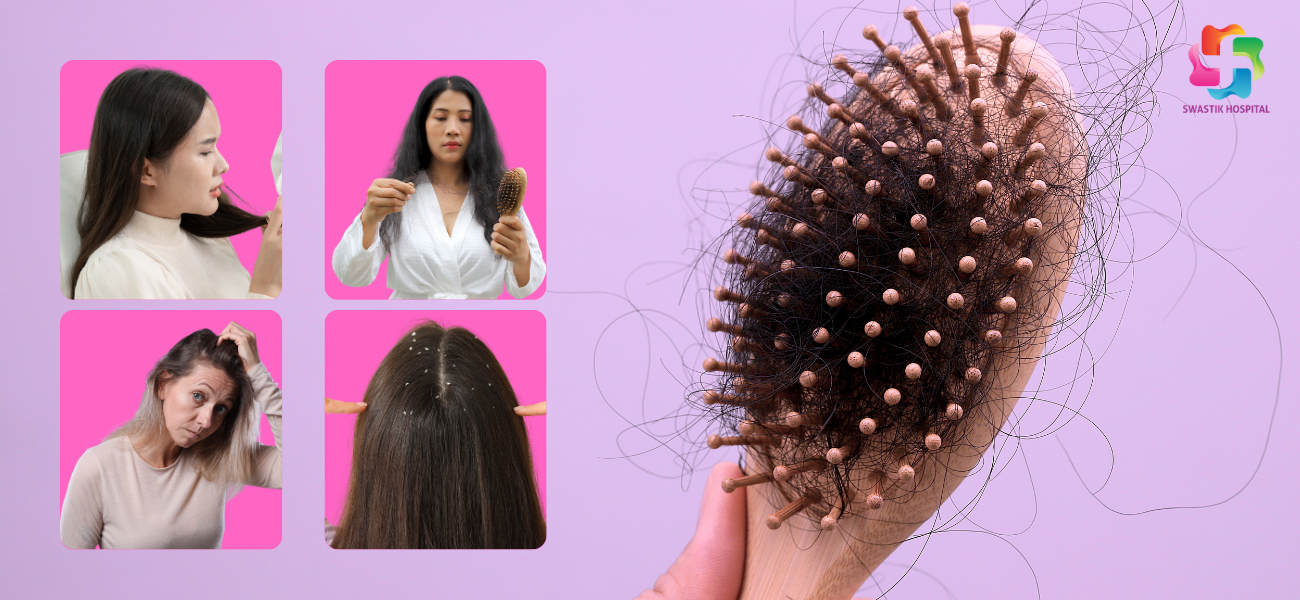
Hair fall is one of those problems that most people ignore at first. You notice a few strands on your pillow, a little hair in the shower drain, or extra shedding while combing. You tell yourself, “It’s normal.” But slowly, you start seeing your hairline change, your parting widen, or your ponytail become thinner.
The truth is—hair fall is common, but it is not always normal.
If you are searching for the right hair fall treatment in Gurgaon, it usually means the problem has started affecting your confidence, routine, and peace of mind. And that’s exactly when professional guidance matters. A dermatologist is not just a “skin doctor”—they are also a trained hair specialist who understands scalp health, hair growth cycles, and medical causes behind hair thinning.
In this detailed guide, you’ll learn the real reasons behind hair fall, what treatments actually work, what myths to avoid, and how a hospital-based dermatology setup like Swastik Hospital can support safe and long-term hair care.
First, a small reassurance: shedding some hair daily is normal. Most people lose around 50–100 hairs per day. But when you start noticing:
…it’s time to stop guessing and start treating.
The key point is simple: hair fall is not one single disease. It’s a symptom with many possible causes, and the right hair fall treatment depends completely on the cause.
To understand hair fall, you need to understand the hair cycle. Hair grows in three phases:
When something disrupts this cycle—stress, hormones, illness, deficiency, genetics—hair shedding increases.
A dermatologist evaluates your pattern of hair fall and scalp condition to identify which phase is being affected.
Stress is one of the most underestimated causes. Emotional stress, work pressure, anxiety, and poor sleep can push hair into the shedding phase.
Even if you take supplements, stress-related hair fall will not improve unless the trigger is addressed.
In India, deficiencies are extremely common due to lifestyle and diet patterns. Hair growth depends on:
A good dermatologist may recommend blood tests only when necessary. At Swastik Hospital, hospital-based care can make it easier to get proper evaluation and avoid random supplement use.
Hormones affect hair more than most people realize.
Common hormonal causes include:
This is why women often experience hair fall along with acne, irregular periods, or weight changes.
Male and female pattern hair loss is one of the most common long-term causes.
In men, it often starts as:
In women, it usually appears as:
This condition can be managed effectively if treated early, but it requires long-term planning, not short-term quick fixes.
Many people notice hair fall after:
This is called telogen effluvium. It often starts 6–10 weeks after illness and can be intense, but it is usually reversible with correct care.
A healthy scalp is essential for healthy hair.
Scalp issues that can cause hair fall include:
A dermatologist treats the scalp first, because without scalp control, hair treatments will not work well.
Heat styling, repeated coloring, keratin treatments, and harsh shampoos can cause breakage and thinning.
This is not always “hair fall from roots,” but it still reduces hair density and makes hair appear weaker.
You should consider visiting a dermatologist if you notice:
If you’re looking for a hair specialist doctor in Gurgaon, it’s best to choose a place where diagnosis is done medically rather than just recommending random oils and shampoos.
A hospital-based dermatology department like Swastik Hospital can be helpful because it supports structured evaluation and safe follow-ups.
The best hair fall treatment depends on the diagnosis. But in general, dermatologists use a combination approach.
A dermatologist may recommend:
The goal is to reduce hair fall first, then stimulate growth.
Important: Never self-start strong hair medicines without a doctor, because some treatments require monitoring and correct dosage.
Many people focus only on hair, not the scalp.
Dermatologists often treat:
Once scalp health improves, hair growth response becomes better.
A realistic plan includes:
This is where patient-friendly counseling at Swastik Hospital can help, especially for families who prefer a hospital environment over cosmetic clinics.
PRP is a popular option. In PRP:
PRP may help in selected cases like early thinning and pattern hair loss. It is not a miracle cure, but it can be a useful support treatment.
Microneedling is sometimes used along with topical treatments to improve absorption and stimulate scalp response.
It is usually recommended for specific hair loss patterns and should be done under professional supervision.
If hair fall is patchy, the cause may be immune-related.
Treatment may include:
Early diagnosis is very important for better recovery.
Let’s clear a few common myths:
Hair fall is not always due to “hard water.”
Hard water can increase dryness and breakage, but it is rarely the main medical cause.
Oils alone cannot cure hair fall.
Oiling can improve dryness, but it does not treat hormonal or genetic hair loss.
Shampoo cannot stop hair fall permanently.
Shampoos help scalp health, but they cannot treat internal causes like deficiency or hormones.
More products do not mean better results.
Most people need fewer products, not more.
A dermatologist’s approach is evidence-based, which is why people prefer a medical hair & skin specialist in Gurgaon for real results.
A proper consultation usually includes:
You should also expect the doctor to explain timelines, because hair growth takes time.
At Swastik Hospital, this type of structured approach can be helpful, especially for patients who want safe medical guidance rather than cosmetic marketing.
Hair treatments require patience.
Most cases show improvement in:
Consistency is more important than “fast results.”
Many people assume hair care is purely cosmetic. But hair fall often has medical causes. That’s why a hospital setup can be safer.
Benefits include:
This is one reason families in Gurgaon prefer dermatology consultation at a trusted place like Swastik Hospital.
Without making it complicated, here are simple steps:
Small habits support big results over time.
Hair fall can feel stressful, but it is treatable in most cases when the cause is identified early. Whether your hair fall is due to stress, deficiency, hormonal imbalance, scalp infection, or genetics, the right diagnosis makes all the difference.
If you are looking for the right hair fall treatment in Gurgaon, focus on medical care, not quick fixes. A trusted dermatology setup like Swastik Hospital can provide structured evaluation, safe treatment options, and long-term guidance for both hair and scalp health.
Because in the end, healthy hair is not about shortcuts—
it’s about correct care, consistency, and choosing the right specialist at the right time.
Swastik Hospital is one of the first multi-speciality hospitals in Gurugram. Being known for staying ahead of times, Swastik Hospital has a state-of-the-art modern medical facility with specialized equipment.
Copyright © 2025 Swastik Hospital | Designed by Artistry Media