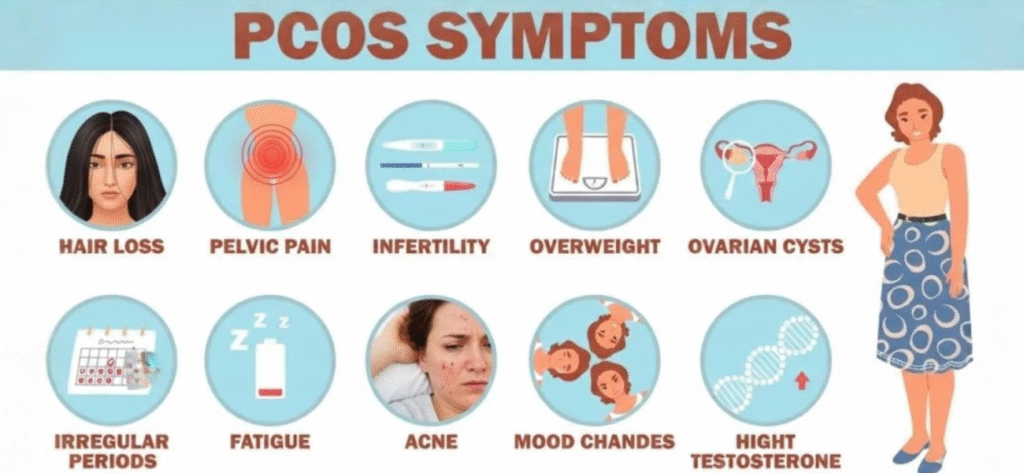
If you’ve been dealing with irregular periods, sudden weight gain, acne that doesn’t improve, or unwanted facial hair—there’s a good chance you’ve already heard the term “PCOS.” Many women search online, feel confused, and end up trying random supplements or home remedies. But PCOS is not something you should guess. It needs the right diagnosis and a long-term plan.
PCOS is common, treatable, and manageable. The problem is not PCOS itself—the problem is delayed diagnosis and misinformation.
This detailed guide will help you understand PCOS clearly: what it is, why it happens, the most common symptoms, how doctors diagnose it, and what the best treatment approach looks like in real life.
PCOS stands for Polycystic Ovary Syndrome. It is a hormonal condition that affects the ovaries and impacts:
Many women with PCOS have irregular ovulation. This can cause delayed periods, acne, and difficulty in conceiving. However, not every woman with PCOS will face fertility issues.
PCOS has become extremely common, especially in urban areas. The reason is a mix of lifestyle factors, stress, lack of sleep, insulin resistance, and genetics.
Today, PCOS is one of the top reasons women visit a gynecologist for:
This is also why “PCOS symptoms” and “PCOS treatment” are high-traffic search terms in India.
PCOS symptoms can look different in different women. Some women have strong symptoms; others have mild signs that go unnoticed for years.
Irregular periods are usually the first major sign. You may notice:
Other common symptoms include:
PCOS can also increase the risk of metabolic issues over time, especially if lifestyle is ignored.
PCOS does not have one single cause. It usually happens due to a combination of factors.
In PCOS, the body may produce higher levels of androgens (male-type hormones). This can cause acne, hair growth on face, and irregular ovulation.
This is one of the most important PCOS triggers. Insulin resistance means your body struggles to use insulin properly, leading to:
Insulin resistance also affects ovulation and hormone balance.
PCOS can run in families. If your mother or sister has PCOS, the risk may be higher.
Modern lifestyle patterns contribute heavily:
The good news is: lifestyle changes can significantly improve PCOS symptoms.
This is one of the most searched questions.
In India, people often use PCOS and PCOD interchangeably. Technically:
In practical gynecology care, doctors focus more on symptoms, hormone levels, and overall health rather than the label.
PCOS diagnosis is not based on ultrasound alone. Many women think, “My ultrasound shows cysts, so I have PCOS.” That is not always true.
A gynecologist usually considers:
A proper evaluation helps avoid over-diagnosis and unnecessary medicines.
At Swastik Hospital, a structured gynecology consultation can help women understand their condition clearly and avoid confusion caused by random online advice.
PCOS treatment is not one-size-fits-all. The best approach depends on your goals.
Some women want:
A good gynecologist creates a plan based on your needs.
Lifestyle changes are the most powerful part of PCOS management. Even a 5–10% weight reduction can improve:
A PCOS-friendly diet is not about starving. It’s about stability.
Focus on:
Avoid:
You don’t need extreme workouts. Consistency matters more.
Best options:
Medical treatment depends on symptoms.
Doctors may prescribe medicines to regulate cycles and protect the uterus lining. This is important because long gaps between periods can increase the risk of endometrial thickening.
Treatment may include:
If acne is severe, a combined approach of gynecology + dermatology can give better results.
Some women may require medicines to improve insulin sensitivity, especially if lifestyle changes alone are not enough.
If pregnancy is a goal, treatment is planned differently. Many women with PCOS can conceive naturally with lifestyle correction and ovulation support.
Yes—many women with PCOS conceive naturally.
However, PCOS can make ovulation irregular, which is why some women take longer to conceive.
A gynecologist may recommend:
The most important thing is early planning and correct guidance instead of panic.
PCOS is manageable, but ignoring it for years can increase risk of:
That’s why early diagnosis and regular follow-up with a gynecologist matters.
PCOS is not only physical. Many women experience:
A supportive gynecologist makes a big difference because PCOS management is a long journey, not a one-time prescription.
You should consult a gynecologist if you have:
A proper consultation at Swastik Hospital can help you get clarity, diagnosis, and a safe treatment plan.
A good hospital setup helps PCOS patients because it offers:
PCOS is not about quick fixes. It needs consistent, safe, and realistic care—something that a trusted hospital environment can support well.
Dr. Ritu is a dedicated Gynecology Specialist who focuses on women’s health issues including irregular periods, PCOS, hormonal imbalance, pregnancy care, and preventive gynecology. Her approach is patient-friendly and evidence-based, with an emphasis on clear diagnosis and long-term health planning.
At Swastik Hospital, Dr. Ritu supports women with PCOS through structured consultation, lifestyle guidance, and personalized treatment planning based on symptoms and health goals.
PCOS can feel overwhelming at first—but with the right information and correct medical guidance, it becomes manageable. The key is to avoid random online treatments and focus on a plan that supports your hormones, metabolism, and lifestyle.
If you are noticing symptoms like irregular periods, acne, weight gain, or hair issues, don’t ignore them. Early consultation with a gynecologist can prevent long-term complications and improve quality of life.
Because PCOS is not the end of your health story—
it’s simply a condition that can be controlled with the right care.