
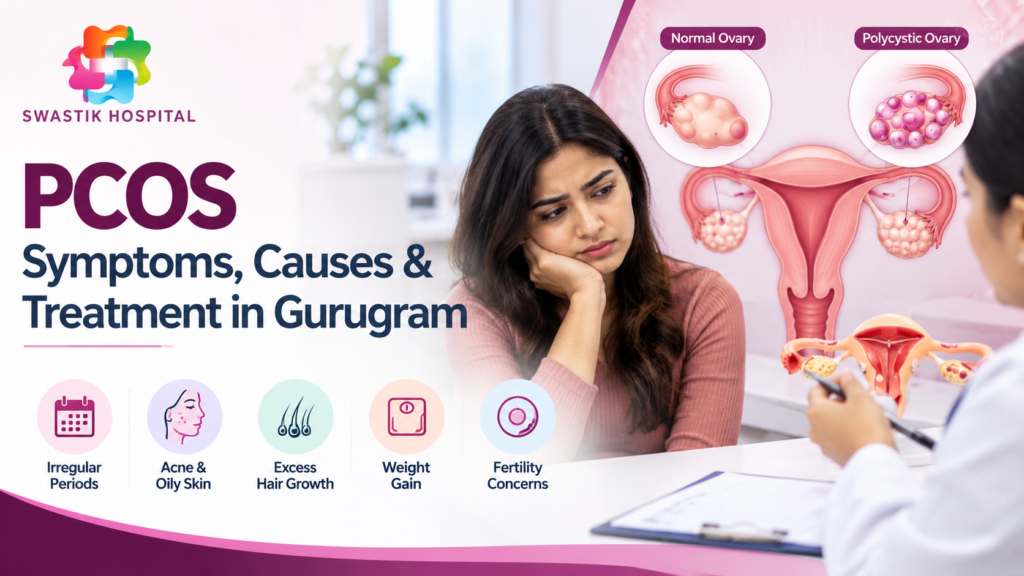
Periods that arrive late, skip a month or vanish for three. Acne that will not settle. Weight that creeps up even when you eat the same. If this sounds familiar, PCOS (polycystic ovary syndrome) may be the reason, and it is far more common than most women realise. The good news: it is manageable once it is properly diagnosed. Here is a clear, practical guide for women in Gurugram.
Quick answer: PCOS is a hormonal condition in which the ovaries do not release eggs regularly and the body makes higher-than-usual male hormones. Common signs are irregular periods, acne, excess facial or body hair, hair thinning and weight gain. It cannot be “cured” but it can be controlled with lifestyle changes and, when needed, medicines supervised by a gynaecologist.
What is PCOS?
PCOS is a hormonal and metabolic condition that affects women of reproductive age. Despite the name, it does not mean you have dangerous “cysts”. The small follicles seen on an ultrasound are immature eggs that did not mature and release. Hormones, insulin resistance and genetics all play a part.
Common PCOS symptoms
- Irregular, infrequent or absent periods
- Heavy or unpredictable bleeding when periods do come
- Acne and oily skin, especially along the jawline
- Thick dark hair on the face, chest or abdomen (hirsutism)
- Thinning of hair on the scalp
- Weight gain, particularly around the waist
- Dark, velvety patches of skin on the neck or underarms
- Difficulty getting pregnant
Not every woman has every symptom. Some are slim and still have PCOS, which is why a proper check-up matters more than guesswork.
What causes it?
There is no single cause. The main contributors are:
- Insulin resistance: the body needs more insulin than normal, which pushes the ovaries to make more male hormones.
- Hormone imbalance: raised androgens interfere with ovulation.
- Family history: PCOS often runs in families.
- Lifestyle: low activity, poor sleep and stress can worsen symptoms, even though they are not the root cause.
How is PCOS diagnosed?
Doctors usually diagnose PCOS when at least two of these three are present, after other conditions are ruled out:
- Irregular or absent ovulation (shown by irregular periods)
- Signs or blood-test evidence of high male hormones
- Polycystic-appearing ovaries on ultrasound
Tests may include a pelvic or transvaginal ultrasound, and blood tests for hormones, thyroid, blood sugar and cholesterol. At Swastik Hospital, in-house laboratory and ultrasound services make it easier to complete these tests in one place.
PCOS treatment options
Treatment is personal. It depends on your symptoms, age and whether you want to conceive now or later.
1. Lifestyle changes (the foundation)
- Regular exercise, such as brisk walking, strength training or yoga, for most days of the week
- A balanced diet with more fibre, protein and whole grains, and fewer sugary drinks and refined foods
- Even a modest weight loss, if you are overweight, can help restore regular cycles
- Seven to eight hours of sleep and stress management
2. Medicines, when needed
Your gynaecologist may suggest hormonal treatment to regulate periods, medicines to improve insulin response, or treatment for acne and unwanted hair. For skin and hair concerns, our dermatology department can work alongside your gynaecologist.
3. Fertility support
If you are trying to conceive, ovulation can often be encouraged with medicines and cycle monitoring. Many women with PCOS conceive with the right guidance.
Why you should not ignore PCOS
Left unmanaged, PCOS is linked to a higher risk of type 2 diabetes, high blood pressure, high cholesterol, fatty liver, sleep apnoea and thickening of the uterine lining. Early care protects your long-term health, not just your periods.
When to see a gynaecologist
- Your periods are more than 35 days apart, or you miss three in a row
- You have very heavy bleeding or bleeding between periods
- Acne, hair growth or hair loss is increasing
- You have been trying to conceive for 6 to 12 months without success
- You notice dark skin patches or sudden weight gain
Severe lower abdominal pain is a different matter. Read our guide to abdominal pain warning signs and seek emergency care if pain is sudden or severe.
PCOS care at Swastik Hospital, Sector 57 Gurugram
Dr. Ritu Khirolia is a gynaecologist and obstetrician at Swastik Hospital, Sushant Lok 2, Sector 57, Gurugram. Our obstetrics and gynaecology department offers consultation, testing and follow-up under one roof, with 24×7 emergency services available. You can meet our full team on the Our Specialist page, or see more health topics on our blog.
Frequently asked questions
Can PCOS be cured completely?
No, PCOS is a lifelong condition, but symptoms can be controlled very well with lifestyle changes and treatment, and many women live healthy, symptom-free lives.
Can I get pregnant with PCOS?
Yes. PCOS can make ovulation irregular, but most women can conceive naturally or with simple ovulation support from a gynaecologist.
Do I have to lose weight to treat PCOS?
Not everyone needs to. If you are overweight, losing even a small amount often improves periods and hormones. Slim women with PCOS benefit from exercise and a balanced diet.
Is PCOS the same as PCOD?
The terms are often used interchangeably in India. Medically, PCOS is the recognised syndrome, and your doctor will confirm which applies to you.
Which tests confirm PCOS?
Doctors use your symptoms, an ultrasound of the ovaries and blood tests for hormones, sugar, thyroid and cholesterol.
Which diet is best for PCOS?
There is no single magic diet. Focus on whole grains, vegetables, pulses, fruit, healthy fats and enough protein, and reduce sugary and heavily processed foods.
How do I book an appointment?
Visit the contact page or call +91-8800897790 or +91-9953892166.
Worried about your cycle or hormones? Book a consultation at Swastik Hospital, Gurugram and get a proper diagnosis.
Disclaimer: This article is for general awareness and is not a substitute for medical advice. Please consult a qualified doctor for diagnosis and treatment.