
Women’s Health

Fibroid treatment Gurugram with Dr Ritu Khirolia at Swastik Hospital
Blog

Uterine Fibroids: Symptoms, Diagnosis and Treatment Options

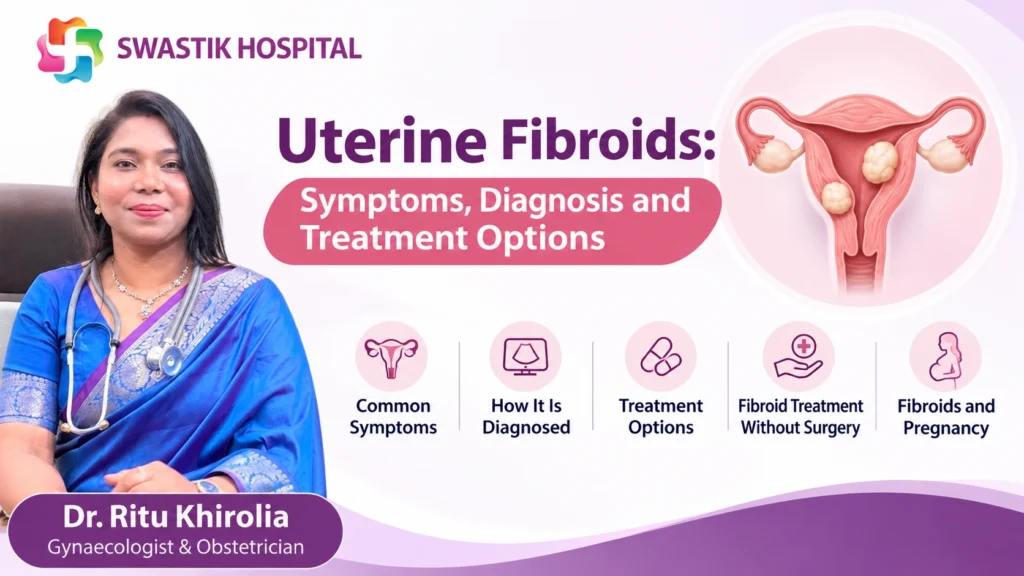
Uterine Fibroids: Symptoms, Diagnosis and Treatment Options Uterine fibroids are common non-cancerous growths that develop in or around the uterus. Women looking for fibroid treatment Gurugram should understand the symptoms, possible causes and available treatment options. Although some fibroids do not cause noticeable problems, others may lead to heavy menstrual bleeding, pelvic pain and fertility-related concerns. Early diagnosis by an experienced gynaecologist can help determine whether monitoring, medication or a medical procedure is appropriate. At Swastik Hospital, Sector 57, Gurugram, women can seek gynaecological consultation and guidance for uterine fibroids and other reproductive health concerns. What Are Uterine Fibroids? Uterine fibroids, medically known as leiomyomas, are non-cancerous growths that develop in or around the muscular wall of the uterus. They can vary in size, ranging from very small growths to larger masses that may change the shape of the uterus. Some women develop a single fibroid, while others may have multiple fibroids. Their location and size play an important role in determining whether they cause symptoms. There are three common types of uterine fibroids: Not every fibroid requires treatment. The need for medical intervention depends on symptoms, fibroid size, location, growth pattern and the woman’s reproductive plans. Common Fibroids Symptoms You Should Not Ignore Many women with uterine fibroids do not experience noticeable symptoms. However, when symptoms develop, they may affect menstrual health, physical comfort and everyday activities. Common fibroids symptoms include: The symptoms can differ from one woman to another. Persistent heavy bleeding, unexplained pelvic discomfort or changes in menstrual patterns should be evaluated by a gynaecologist rather than ignored. What Causes Uterine Fibroids? The exact cause of uterine fibroids is not fully understood. However, research suggests that several hormonal, genetic and biological factors may contribute to their development. Some factors associated with fibroids include: Hormonal influence: Oestrogen and progesterone play an important role in the growth of uterine fibroids. These hormones help regulate the menstrual cycle and influence the uterine lining. Genetic factors: Women with a family history of uterine fibroids may have a higher likelihood of developing them. Age and reproductive stage: Fibroids are commonly diagnosed during the reproductive years. Their growth may slow down after menopause as hormone levels decline. Other risk factors: Body weight, metabolic factors and individual health history may also influence fibroid development. Having one or more risk factors does not necessarily mean that a woman will develop fibroids. How Are Uterine Fibroids Diagnosed? Accurate diagnosis is essential before deciding on a treatment approach. A gynaecologist evaluates the patient’s symptoms, menstrual history, medical background and reproductive goals. Depending on the findings, the following investigations may be recommended: 1. Pelvic Examination A physical examination may help the doctor identify changes in the size or shape of the uterus. 2. Ultrasound Pelvic or transvaginal ultrasound is commonly used to identify fibroids and assess their number, size and location. 3. Blood Tests A complete blood count (CBC) may be advised if heavy menstrual bleeding is present. It helps assess whether the patient has anaemia. 4. MRI Scan Magnetic Resonance Imaging may be recommended in selected cases when more detailed information about fibroid location, size or surrounding structures is required. 5. Hysteroscopy If a fibroid is suspected inside the uterine cavity, hysteroscopy may help the doctor examine the inside of the uterus directly. Not every patient needs all these tests. Investigations are selected according to the symptoms and clinical findings. Uterine Fibroid Treatment Options The right treatment depends on the severity of symptoms, fibroid characteristics, age, overall health and whether the woman wishes to become pregnant in the future. Women searching for uterine fibroid treatment in Sector 57 Gurugram should understand that treatment does not always mean surgery. In some cases, regular monitoring or medication may be sufficient. 1. Watchful Waiting Women with small or asymptomatic fibroids may not require immediate treatment. A doctor may recommend periodic examinations or ultrasound monitoring to check for changes. This approach is often suitable when fibroids are not affecting menstrual health, fertility or daily activities. 2. Medication for Symptom Management Certain medications can help manage fibroid-related symptoms, particularly heavy menstrual bleeding and pain. Depending on the patient’s condition, treatment may include: Medication may help control symptoms, but it does not necessarily eliminate fibroids permanently. Treatment should always be guided by a qualified medical professional. 3. Fibroid Treatment Without Surgery Many women explore fibroid treatment without surgery, particularly when they want to avoid an operation or preserve their uterus. Depending on the type and severity of fibroids, non-surgical or less invasive approaches may include: These treatments are not suitable for everyone. Women planning pregnancy should discuss the potential effects on fertility and pregnancy outcomes before choosing a procedure. 4. Myomectomy Myomectomy is a surgical procedure in which fibroids are removed while preserving the uterus. It may be recommended for women experiencing significant symptoms or certain fertility-related concerns. Depending on the size, number and location of fibroids, the procedure may be performed through hysteroscopy, laparoscopy or open surgery. Fibroids can sometimes develop again after myomectomy, so follow-up care remains important. 5. Hysterectomy Hysterectomy involves the surgical removal of the uterus. It may be considered when fibroids cause severe symptoms and other treatment options are unsuitable or unsuccessful. Since pregnancy is no longer possible after hysterectomy, this decision requires careful discussion with the treating gynaecologist. Fibroids and Pregnancy: What Should Women Know? The relationship between fibroids and pregnancy depends largely on the size and location of the growths. Many women with uterine fibroids experience normal pregnancies and deliveries. However, certain fibroids may affect reproductive health or pregnancy outcomes. Possible complications include: Fibroids that distort the uterine cavity may have a greater impact on fertility than fibroids that do not affect the cavity. Women planning pregnancy should undergo an appropriate gynaecological assessment. Treatment decisions should consider the potential benefits, risks and timing of future conception. When Should You Consult a Gynaecologist? Do not delay a consultation if you experience unusually heavy periods, persistent pelvic pain, prolonged menstrual bleeding or difficulty conceiving. Seek urgent medical

Gynecologist hospital in Gurugram Sector 64 with women’s healthcare services at Swastik Hospital
Blog

Gynecologist Hospital in Gurugram Sector 64 | Swastik Hospital

Gynecologist Hospital in Gurugram Sector 64: How to Choose the Right Care Medical content team, Swastik Hospital, Sushant Lok 2, Sector 57, Gurugram. Reviewed with the obstetrics and gynecology department. Last updated: 31 October 2026. Finding a gynecologist hospital in Gurugram Sector 64 is easier when you know what to look for. Women need care at many stages of life. A teenager may need advice on painful periods. A young couple may plan a pregnancy. Later, a woman may face menopause. First, a quick note: Swastik Hospital is in Sector 57, Sushant Lok 2, not in Sector 64. This guide explains what a good women’s health hospital offers, and how to decide if Swastik is a good fit for you. Quick answer: A good gynecologist hospital offers a qualified gynecologist, ultrasound, laboratory tests, antenatal care, support for newborns and a clear way to reach emergency help. Swastik Hospital in Sector 57 has an obstetrics and gynecology department led by Dr. Ritu Khirolia, with ultrasound, laboratory, NICU and 24×7 emergency services. Residents of Sector 64 should check travel time on a map app and call ahead. When should you see a gynecologist? Many women wait too long. They feel shy, or they think the problem is normal. However, a gynecologist can help. So, book a visit if you have: Severe bleeding or sudden pain is different. Please read our guide on a gynecologist emergency hospital in Gurugram for warning signs. Care at every stage of life Your needs change with age. So, a good hospital should serve you at each stage. Here is what that looks like. Teenage years Periods can be irregular in the first years. A gynecologist helps with painful cycles, hygiene advice and questions about growth. Planning a pregnancy A pre-pregnancy visit checks your health, your medicines and your vaccinations. Your doctor may also suggest folic acid and review any long-term conditions. During pregnancy Regular antenatal visits protect you and your baby. The World Health Organization notes that most maternal deaths are preventable with timely, quality care. Therefore, do not skip check-ups, scans or blood tests, even when you feel well. After delivery Recovery needs follow-up too. Your doctor checks bleeding, wound healing and feeding. Then, you can also discuss your mood and family planning. Midlife and menopause Periods change, and symptoms such as hot flashes and poor sleep can appear. A gynecologist gives advice. If needed, the doctor also offers tests and treatment. Common conditions a gynecologist treats Skin and hair problems linked to hormones may also need the dermatology department. How to choose a gynecologist hospital in Gurugram Sector 64 Use this checklist before you book. It works for any hospital, so keep it handy. Gynecology care at Swastik Hospital Swastik Hospital is at 2119, near Rohit Department Store, Block G, Sushant Lok 2, Sector 57, Gurugram. The obstetrics and gynecology department includes Dr. Ritu Khirolia, gynecologist and obstetrician. Meet the full team on the Our Specialist page. Services around women’s health include: Because specific services change over time, please call to confirm what you need, such as delivery services or health packages. Residents of Sector 64 can check the route to Sector 57 in advance. A simple antenatal checklist If you are pregnant, keep it simple. Book early. Take your prescribed supplements. Eat well and rest. Attend every scheduled visit. Also, learn the danger signs, such as bleeding, leaking fluid or reduced baby movement. If you notice any, go to the hospital at once. Most pregnancies go well when you stay in touch with your doctor. Screening and prevention Prevention is easier than treatment. So, ask your doctor which checks suit your age. These may include a pelvic exam, a Pap smear or HPV test, a breast exam, and blood tests for sugar, thyroid and anemia. Also, ask about vaccines. Early checks find problems when they are small. As a result, treatment is simpler. Myths that keep women away How to prepare for your first visit Read what patients say or learn more about Swastik Hospital. Frequently asked questions Is there a gynecologist hospital in Gurugram Sector 64? Swastik Hospital is in Sector 57, Sushant Lok 2, and offers obstetrics and gynecology. Residents of Sector 64 should check travel time and call ahead. When should I visit a gynecologist for the first time? Visit when you have period problems, pelvic pain or unusual discharge, plan a pregnancy, or need routine women’s health advice. There is no need to wait for a serious problem. How often should I have a gynecological check-up? Many women benefit from a yearly check-up. Your doctor will advise screening tests that suit your age and health. What happens at the first antenatal visit? The doctor asks about your health history, checks your blood pressure and weight, orders blood tests and an ultrasound, and plans your visits. Is NICU available at Swastik Hospital? Yes. The hospital lists NICU and PICU services. Please confirm current availability when you call. Can I get emergency care at night? Swastik Hospital offers 24×7 emergency services. For severe bleeding or pain, go to the emergency room without delay. How do I book an appointment? Use the contact page or call +91-8800897790 or +91-9953892166. Have a question about your health? Book a consultation at Swastik Hospital and get clear, private advice.

Pregnant woman consulting a gynecologist at a hospital in Gurugram
Blog

When to Visit a Gynecologist During Pregnancy | Gurugram

When Should You Visit a Gynecologist During Pregnancy? Pregnancy is an important stage in a woman’s life, bringing physical changes, new experiences and questions about the health of both mother and baby. From the first positive pregnancy test to the final weeks before delivery, regular medical checkups help monitor progress and identify potential concerns early. Many expecting mothers wonder when they should visit a gynecologist, how often pregnancy checkups are needed and which symptoms require immediate medical attention. If you are looking for a gynecologist hospital in Gurugram Sector 57, understanding the importance of antenatal care can help you prepare for a healthier and more informed pregnancy journey. Swastik Hospital in Sector 57, Gurugram, provides gynecology and obstetrics services as part of its multispeciality healthcare offerings. You can explore the hospital’s gynecology and obstetrics services in Gurugram to learn more about available women’s healthcare services. Why Is Regular Gynecological Care Important During Pregnancy? Pregnancy involves several changes in the body, and every pregnancy progresses differently. Regular consultations with a gynecologist help assess the mother’s health, monitor the baby’s development and guide decisions about tests, nutrition and delivery planning. During pregnancy appointments, a doctor may: The timing and frequency of appointments depend on the stage of pregnancy, medical history and individual needs. When Should You Visit a Gynecologist During Pregnancy? 1. After a Positive Pregnancy Test Once you have a positive pregnancy test, arrange an appointment with a healthcare professional. An early consultation helps establish the next steps, review your medical history and determine the appropriate timing for investigations. Your doctor may discuss the expected due date, any existing medical conditions, current medications and supplements. They can also explain which symptoms are common and which need further assessment. Do not stop prescribed medicines or begin new medication or supplements without medical advice. 2. During the First Trimester The first trimester covers approximately the first 12 weeks of pregnancy. Early antenatal care helps assess your health and identify factors that may require additional monitoring. Your doctor may recommend blood and urine tests, screening investigations and an ultrasound at the appropriate stage. Common early pregnancy symptoms can include nausea, tiredness, breast tenderness and frequent urination. However, severe pain, heavy bleeding or fainting should not be dismissed as routine pregnancy symptoms. 3. During the Second Trimester The second trimester generally covers weeks 13 to 27. During this period, antenatal visits help monitor the mother’s health and the baby’s development. Depending on your pregnancy and medical history, your doctor may recommend an ultrasound to assess fetal development and other screening tests at suitable stages. This is also a useful time to discuss nutrition, physical activity, sleep, vaccinations and any concerns about your changing body. 4. During the Third Trimester The third trimester begins at around week 28 and continues until delivery. Checkups during this stage focus on monitoring the mother and baby, assessing symptoms and preparing for birth. Your gynecologist may discuss fetal movement, blood pressure, the baby’s position, delivery planning and signs of labour. Attend appointments according to your clinician’s recommended schedule, even if you feel well. Which Pregnancy Symptoms Need Medical Attention? Some discomforts are common during pregnancy, but certain symptoms require prompt medical assessment. Contact your maternity care provider urgently if you experience: Severe symptoms, heavy bleeding, seizures, chest pain or serious breathing difficulty require emergency medical attention. Do not wait for a routine appointment if you think you or your baby may be in danger. If you are searching online for a gynecologist emergency hospital in Gurugram Sector 65 or nearby areas, verify the hospital’s actual location, emergency availability and maternity facilities before travelling. Swastik Hospital lists its location in Sector 57, Gurugram, and advertises 24×7 emergency services. For urgent assistance, consult the hospital’s 24×7 emergency care information and call ahead when it is safe to do so. In a life-threatening emergency, seek immediate emergency help rather than delaying care to browse websites. What Tests May Be Recommended During Pregnancy? Pregnancy investigations are selected according to the stage of pregnancy, medical history, symptoms and clinical findings. Not every patient requires the same tests. Common investigations may include: Blood and Urine Tests These can help assess factors such as blood group, anaemia, infections and other health conditions. Additional tests may be recommended depending on individual risk factors. Ultrasound Scans Ultrasound examinations can help assess the pregnancy, fetal development and other relevant findings at recommended stages. Screening for Pregnancy-Related Conditions Your doctor may recommend screening for conditions such as gestational diabetes or high blood pressure complications when appropriate. Your gynecologist should explain why a test is recommended, when it should be performed and what the results mean for your care. How Can You Prepare for a Pregnancy Checkup? A little preparation can make each appointment more productive. Before your visit: Ask your healthcare provider which symptoms require an urgent call and whom to contact outside normal appointment hours. Why Choose a Multispeciality Hospital for Pregnancy Care? Pregnancy care may involve more than routine gynecological consultations, particularly when a patient has an existing medical condition or develops a complication. A multispeciality hospital may help coordinate consultations, diagnostic investigations and additional medical support when clinically required. When comparing a gynecologist hospital in Gurugram Sector 57, consider the qualifications of the treating doctor, the availability of relevant services, emergency arrangements, communication and follow-up care. It is also useful to ask about maternity facilities, delivery arrangements and access to newborn care rather than assuming that every hospital offers the same services. Swastik Hospital lists gynecology and obstetrics, pediatrics, general medicine, orthopedics and general surgery among its specialities. You can visit the official Swastik Hospital website for hospital information and contact details. Why Is Newborn Care Important After Delivery? Healthcare does not end when the baby is born. Newborn examinations and follow-up visits help monitor feeding, weight, growth and general health. A pediatrician can guide parents on breastfeeding support, vaccination schedules, newborn hygiene and developmental milestones. Families looking for a pediatrician hospital in Gurugram Sector 57 can

Swastik Hospital is one of the first multi-speciality hospitals in Gurugram. Being known for staying ahead of times, Swastik Hospital has a state-of-the-art modern medical facility with specialized equipment.

Copyright © 2025 Swastik Hospital |  Designed by Artistry Media

Scroll to Top