
Uterine Fibroids: Symptoms, Diagnosis and Treatment Options
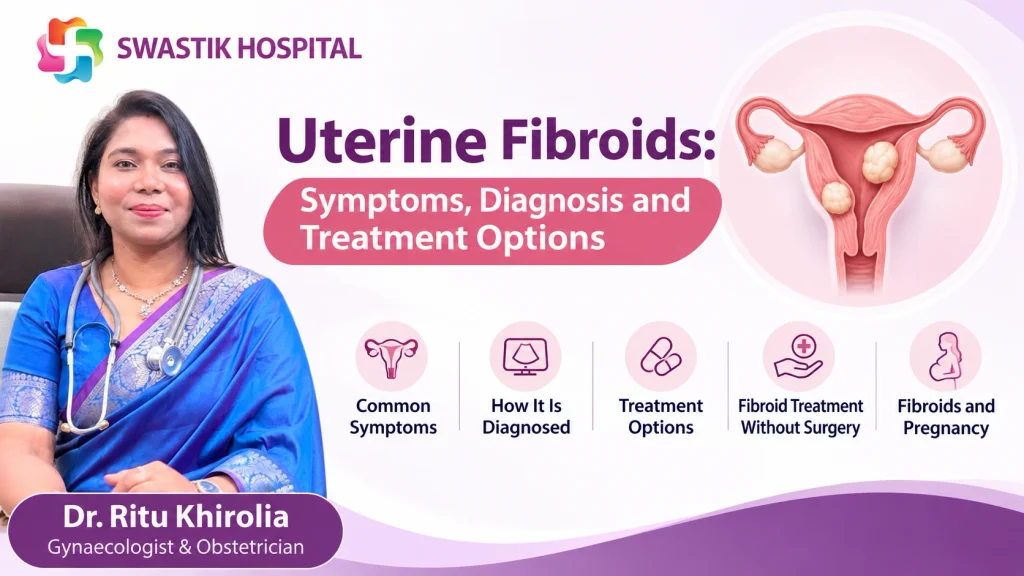
Uterine fibroids are common non-cancerous growths that develop in or around the uterus. Women looking for fibroid treatment Gurugram should understand the symptoms, possible causes and available treatment options. Although some fibroids do not cause noticeable problems, others may lead to heavy menstrual bleeding, pelvic pain and fertility-related concerns.
Early diagnosis by an experienced gynaecologist can help determine whether monitoring, medication or a medical procedure is appropriate. At Swastik Hospital, Sector 57, Gurugram, women can seek gynaecological consultation and guidance for uterine fibroids and other reproductive health concerns.
What Are Uterine Fibroids?
Uterine fibroids, medically known as leiomyomas, are non-cancerous growths that develop in or around the muscular wall of the uterus. They can vary in size, ranging from very small growths to larger masses that may change the shape of the uterus.
Some women develop a single fibroid, while others may have multiple fibroids. Their location and size play an important role in determining whether they cause symptoms.
There are three common types of uterine fibroids:
- Intramural fibroids: Develop within the muscular wall of the uterus.
- Subserosal fibroids: Grow on the outer surface of the uterus and may cause pressure on nearby organs.
- Submucosal fibroids: Develop beneath the inner uterine lining and may contribute to heavy menstrual bleeding and fertility-related concerns.
Not every fibroid requires treatment. The need for medical intervention depends on symptoms, fibroid size, location, growth pattern and the woman’s reproductive plans.
Common Fibroids Symptoms You Should Not Ignore
Many women with uterine fibroids do not experience noticeable symptoms. However, when symptoms develop, they may affect menstrual health, physical comfort and everyday activities.
Common fibroids symptoms include:
- Heavy menstrual bleeding or periods lasting longer than usual.
- Severe menstrual cramps and pelvic pain.
- A feeling of pressure or fullness in the lower abdomen.
- Frequent urination due to pressure on the bladder.
- Lower back pain or discomfort in the pelvic region.
- Pain or discomfort during sexual intercourse.
- Difficulty conceiving in certain cases.
- Anaemia caused by prolonged or excessive menstrual bleeding.
The symptoms can differ from one woman to another. Persistent heavy bleeding, unexplained pelvic discomfort or changes in menstrual patterns should be evaluated by a gynaecologist rather than ignored.
What Causes Uterine Fibroids?
The exact cause of uterine fibroids is not fully understood. However, research suggests that several hormonal, genetic and biological factors may contribute to their development.
Some factors associated with fibroids include:
Hormonal influence: Oestrogen and progesterone play an important role in the growth of uterine fibroids. These hormones help regulate the menstrual cycle and influence the uterine lining.
Genetic factors: Women with a family history of uterine fibroids may have a higher likelihood of developing them.
Age and reproductive stage: Fibroids are commonly diagnosed during the reproductive years. Their growth may slow down after menopause as hormone levels decline.
Other risk factors: Body weight, metabolic factors and individual health history may also influence fibroid development.
Having one or more risk factors does not necessarily mean that a woman will develop fibroids.
How Are Uterine Fibroids Diagnosed?
Accurate diagnosis is essential before deciding on a treatment approach. A gynaecologist evaluates the patient’s symptoms, menstrual history, medical background and reproductive goals.
Depending on the findings, the following investigations may be recommended:
1. Pelvic Examination
A physical examination may help the doctor identify changes in the size or shape of the uterus.
2. Ultrasound
Pelvic or transvaginal ultrasound is commonly used to identify fibroids and assess their number, size and location.
3. Blood Tests
A complete blood count (CBC) may be advised if heavy menstrual bleeding is present. It helps assess whether the patient has anaemia.
4. MRI Scan
Magnetic Resonance Imaging may be recommended in selected cases when more detailed information about fibroid location, size or surrounding structures is required.
5. Hysteroscopy
If a fibroid is suspected inside the uterine cavity, hysteroscopy may help the doctor examine the inside of the uterus directly.
Not every patient needs all these tests. Investigations are selected according to the symptoms and clinical findings.
Uterine Fibroid Treatment Options
The right treatment depends on the severity of symptoms, fibroid characteristics, age, overall health and whether the woman wishes to become pregnant in the future.
Women searching for uterine fibroid treatment in Sector 57 Gurugram should understand that treatment does not always mean surgery. In some cases, regular monitoring or medication may be sufficient.
1. Watchful Waiting
Women with small or asymptomatic fibroids may not require immediate treatment. A doctor may recommend periodic examinations or ultrasound monitoring to check for changes.
This approach is often suitable when fibroids are not affecting menstrual health, fertility or daily activities.
2. Medication for Symptom Management
Certain medications can help manage fibroid-related symptoms, particularly heavy menstrual bleeding and pain.
Depending on the patient’s condition, treatment may include:
- Medicines to control heavy menstrual bleeding.
- Pain-relieving medication for menstrual discomfort.
- Hormonal treatments to manage bleeding.
- Specific hormone-modulating medicines in selected cases.
Medication may help control symptoms, but it does not necessarily eliminate fibroids permanently. Treatment should always be guided by a qualified medical professional.
3. Fibroid Treatment Without Surgery
Many women explore fibroid treatment without surgery, particularly when they want to avoid an operation or preserve their uterus.
Depending on the type and severity of fibroids, non-surgical or less invasive approaches may include:
- Medication to control bleeding and related symptoms.
- Hormonal management in appropriate cases.
- Uterine artery embolisation (UAE), a minimally invasive procedure that reduces blood supply to fibroids.
- MRI-guided focused ultrasound in selected patients where available and clinically appropriate.
These treatments are not suitable for everyone. Women planning pregnancy should discuss the potential effects on fertility and pregnancy outcomes before choosing a procedure.
4. Myomectomy
Myomectomy is a surgical procedure in which fibroids are removed while preserving the uterus. It may be recommended for women experiencing significant symptoms or certain fertility-related concerns.
Depending on the size, number and location of fibroids, the procedure may be performed through hysteroscopy, laparoscopy or open surgery.
Fibroids can sometimes develop again after myomectomy, so follow-up care remains important.
5. Hysterectomy
Hysterectomy involves the surgical removal of the uterus. It may be considered when fibroids cause severe symptoms and other treatment options are unsuitable or unsuccessful.
Since pregnancy is no longer possible after hysterectomy, this decision requires careful discussion with the treating gynaecologist.
Fibroids and Pregnancy: What Should Women Know?
The relationship between fibroids and pregnancy depends largely on the size and location of the growths.
Many women with uterine fibroids experience normal pregnancies and deliveries. However, certain fibroids may affect reproductive health or pregnancy outcomes.
Possible complications include:
- Difficulty with conception in some cases.
- Increased risk of miscarriage with certain fibroid locations.
- Pain or discomfort during pregnancy.
- Abnormal positioning of the baby in selected cases.
- Increased likelihood of certain delivery complications.
Fibroids that distort the uterine cavity may have a greater impact on fertility than fibroids that do not affect the cavity.
Women planning pregnancy should undergo an appropriate gynaecological assessment. Treatment decisions should consider the potential benefits, risks and timing of future conception.
When Should You Consult a Gynaecologist?
Do not delay a consultation if you experience unusually heavy periods, persistent pelvic pain, prolonged menstrual bleeding or difficulty conceiving.
Seek urgent medical attention if you experience very heavy bleeding accompanied by dizziness, fainting, severe weakness or sudden intense pelvic pain.
If you are looking for a gynaecologist in Sector 57 Gurugram, choosing a hospital with appropriate consultation and diagnostic support can help you understand your condition and available treatment options.
Why Consider Swastik Hospital for Gynaecological Care in Gurugram?
Swastik Hospital provides gynaecology and obstetrics services for women’s healthcare needs in Gurugram. Its gynaecology department includes Dr. Ritu Khirolia, Gynaecologist and Obstetrician, who provides care for a range of women’s health concerns.
The hospital’s gynaecology services include the management of fibroids, ovarian cysts, menstrual disorders, pregnancy care and other reproductive health conditions.
Located in Sector 57, Gurugram, Swastik Hospital focuses on patient-centred medical care, appropriate evaluation and individualised treatment guidance.
If you are considering consultation for fibroids, explore the hospital’s Gynaecology Services at Swastik Hospital to learn more about its women’s healthcare facilities.
You can also visit the Swastik Hospital website to learn about its medical departments and available services.
Book a Gynaecology Consultation at Swastik Hospital, Gurugram
Uterine fibroids are common, and their treatment varies depending on individual symptoms, reproductive goals and medical findings. Early evaluation can help women understand their condition and make informed decisions about their health.
If you are experiencing fibroid-related symptoms or looking for guidance on uterine fibroid treatment in Sector 57 Gurugram, consult the gynaecology team at Swastik Hospital.
Swastik Hospital, Gurugram
Address: 2119, Near Rohit Department Store, Block G, Sushant Lok 2, Sector 57, Gurugram, Haryana – 122011.
For more information about our healthcare services, gynaecology care and hospital facilities, visit Swastik Hospital, Gurugram.
Frequently Asked Questions About Uterine Fibroids
1. Are uterine fibroids cancerous?
Most uterine fibroids are benign (non-cancerous) growths. They are different from uterine cancer. However, unusual bleeding or concerning symptoms should always be evaluated by a gynaecologist.
2. Can uterine fibroids go away without surgery?
Some fibroids can be managed without surgery through medication, symptom management and regular monitoring. Fibroids may also shrink after menopause. The appropriate approach depends on their size, location and associated symptoms.
3. What are the most common fibroids symptoms?
Common symptoms include heavy menstrual bleeding, prolonged periods, pelvic pain, abdominal pressure, frequent urination and discomfort during intercourse. Some women may not experience any symptoms.
4. Can fibroids affect pregnancy?
Yes, certain fibroids may affect fertility or pregnancy depending on their location and size. However, many women with fibroids have healthy pregnancies. A gynaecological assessment can help identify potential concerns.
5. Is fibroid removal always necessary?
No. Treatment is not always necessary. Women with small fibroids and no significant symptoms may only need periodic monitoring. Treatment is considered when fibroids cause symptoms or other medical concerns.
6. Which doctor should I consult for uterine fibroids in Sector 57 Gurugram?
A qualified gynaecologist or obstetrician-gynaecologist can evaluate uterine fibroids, recommend appropriate investigations and discuss treatment options based on individual health requirements.
7. Can uterine fibroids grow back after treatment?
Yes, new fibroids may develop after procedures such as myomectomy. The possibility of recurrence depends on individual factors, which is why regular follow-up is important.